
A note to my followers:
For those of you who may follow my posts, you may notice that the references I get from Bible Hub have changed from utilizing Strong’s Concordance to Lexicon, along with the Strong’s numbers.
Concordance Limitation:
Strong’s Concordance is limited because it only provides a list of where a word appears in a specific translation, typically the King James Version (KJV). It doesn’t offer the depth of meaning and context needed for accurate word study.
Lexicon Advantages:
Lexicons delve deeper into the original language meanings of words, including their grammatical context, historical usage, and semantic range. This allows for more nuanced and accurate interpretations of scripture.
My prayer is that you read and study these devotional passages with me in an earnest desire to seek the Lord (Phil)
¨¨¨ These devotionals are much easier to read on-line ¨¨¨
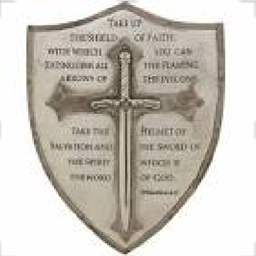
Put on the full armor of God
THE THOUGHT FOR THE DAY
Grow deep into the Word of God and allow Him to etch onto your heart to trust and put your hope only in Him
“Preserve me, O God: for in thee do I put my trust.”
Psalm 16:1 (KJV)
Genesis 29
Jacob’s first wife, Leah, ended up being the wife of promise, not Rachel, as Leah bore him Rueben, Simeon, Levi, and Judah
Genesis 29:31-35 (KJV), “31 And when the Lord saw that Leah was hated, he opened her womb: but Rachel was barren. 32 And Leah conceived, and bare a son, and she called his name Reuben: for she said, Surely the Lord hath looked upon my affliction; now therefore my husband will love me. 33 And she conceived again, and bare a son; and said, Because the Lord hath heard I was hated, he hath therefore given me this son also: and she called his name Simeon. 34 And she conceived again, and bare a son; and said, Now this time will my husband be joined unto me, because I have born him three sons: therefore was his name called Levi. 35 And she conceived again, and bare a son: and she said, Now will I praise the Lord: therefore she called his name Judah; and left bearing.”
Isaiah 20
Isaiah 20:1 (KJV), “In the year that Tartan came unto Ashdod, (when Sargon the king of Assyria sent him,) and fought against Ashdod, and took it.”
Identification and references
Tartan – It’s a title, not a proper name
Brown-Driver-Briggs – Title of Assyrian General = field-marshal.
Ashdod is presented as a major Philistine city, one of the five chief cities of the Philistines, along with Gaza, Ashkelon, Ekron, and Gath
So, why punish Ethiopia/ Aethiopia (Cush)?
Isaiah 20:3-4 (KJV), “3 And the Lord said, Like as my servant Isaiah hath walked naked and barefoot three years for a sign and wonder upon Egypt and upon Ethiopia; 4 So shall the king of Assyria lead away the Egyptians prisoners, and the Ethiopians captives, young and old, naked and barefoot, even with their buttocks uncovered, to the shame of Egypt.”
Israel was putting too much faith and dependency in Ethiopia rather than God
The transition from “Cush” to “Ethiopia” wasn’t a sudden shift in a specific year. It was a gradual process of Greek and Roman influence, and the area was known as Cush by ancient Egyptians, Ethiopia by ancient Greeks, and Nubia by medieval Arabs.
Psalms 16
The title of this Psalm is “The hope of the Faithful, and the Messiah’s victory”
According to the Bible translation within Bible Hub, this is verse one:
“A Michtam of David; Preserve me, O God, for in You I put my trust”.
Most scholars are unsure of the exact meaning of the word ‘Michtam’, let’s explore:
Lexicon (4387) – Miktam: Miktam. Word Origin: [from H3799 (כָּתַם – stain)].
Lexicon (3799) – katham: To seal, to mark, to inscribe. 1. (properly) to carve or engrave. 2. (by implication) to inscribe indelibly.
Now, let’s look further into verse 1
Psalm 16:1 (KJV), “Preserve me, O God: for in thee do I put my trust.”
[1]Lexicon (8104) – shamar: To keep, guard, observe, give heed.
It makes sense to me that David is emphasizing how God has impacted, etched, carved, or engraved on his heart God’s trust and dedication to him; let’s examine:
Psalm 16:1-2 (KJV), “1 Preserve me, O God: for in thee do I put my trust. 2 O my soul, thou hast said unto the Lord, Thou art my Lord: my goodness extendeth not to thee.”
Psalm 16:5 (KJV), “The Lord is the portion of mine inheritance and of my cup: thou maintainest my lot.”
God’s consistency with David assures him of victory
Psalm 16:7 (KJV), “I will bless the Lord, who hath given me counsel: my reins also instruct me in the night seasons.”
Psalm 16:8-9 (KJV), “8 I have set the Lord always before me: because he is at my right hand, I shall not be moved. 9 Therefore my heart is glad, and my glory rejoiceth: my flesh also shall rest in hope.”
Psalm 16:11 (KJV), “Thou wilt shew me the path of life: in thy presence is fulness of joy; at thy right hand there are pleasures for evermore.”
Proverbs 16
The first verse of this Proverb is one of the most powerful verses in scripture; in my opinion
Proverbs 16:1 (KJV), “The preparations of the heart in man, and the answer of the tongue, is from the Lord.”
Proverbs 16:1a (KJV), “The preparations of the heart in man.”
The preparation of the heart
Due to the fall of man, Adam Eve, all mankind are born into sin and a deceitful heart
What is meant by ‘The preparations of the heart’
In the original Hebrew, the word, preparation
Lexicon (4633) – maarak: Arrangement, setting, row.
The word preparation as used in this content
Brown-Driver-Briggs – arrangement; — plural construct; to man belong arrangements (plans) of the mind.
In this verse, the usage of the word ‘man’ is actually not gender specific – mankind
Proverbs 16:1a (KJV), “The preparations of the heart in man.”
Lexicon (120) – adam: Man, mankind, human, Adam.
The word man as used in this content
Brown-Driver-Briggs – 2. collective man, mankind.
God views a deceitful heart as something to be guarded against and changed. Scripture highlights the inherent deception within the human heart
Proverbs 16:9 (KJV), “A man’s heart deviseth his way: but the Lord directeth his steps.”
Jeremiah 17:9 (KJV), “The heart is deceitful above all things, and desperately wicked: who can know it?”
Mark 7:21-23 (KJV), “21 For from within, out of the heart of men, proceed evil thoughts, adulteries, fornications, murders, 22 Thefts, covetousness, wickedness, deceit, lasciviousness, an evil eye, blasphemy, pride, foolishness: 23 All these evil things come from within, and defile the man.”
Once we enter into this world, though God gives us free will; remember, Adam and Eve had a choice, He always knows and directs every movement of ours
Proverbs 16:1b (KJV), “and the answer of the tongue, is from the Lord.”
Matthew 10:19 (KJV), “But when they deliver you up, take no thought how or what ye shall speak: for it shall be given you in that same hour what ye shall speak.”
Proverbs 16:9 (KJV), “A man’s heart deviseth his way: but the Lord directeth his steps.”
Every Christian is forgiven for their sins and are guaranteed a home with God
Proverbs 16:6 (KJV), “By mercy and truth iniquity is purged: and by the fear of the Lord men depart from evil.”
A reiteration of a prudent tongue
Proverbs 16:21-24 (KJV), “21 The wise in heart shall be called prudent: and the sweetness of the lips increaseth learning. 22 Understanding is a wellspring of life unto him that hath it: but the instruction of fools is folly. 23 The heart of the wise teacheth his mouth, and addeth learning to his lips. 24 Pleasant words are as an honeycomb, sweet to the soul, and health to the bones.”
Without Jesus in your life, you are doomed
Proverbs 16:25 (KJV), “There is a way that seemeth right unto a man, but the end thereof are the ways of death.”
Backbiting and spreading rumors will ruin friendships
Proverbs 16:28 (KJV), “A froward man soweth strife: and a whisperer separateth chief friends.”
In today’s language
Proverbs 16:28 (NASB1995), “A perverse man spreads strife, And a slanderer separates intimate friends.”
Becoming grey in our later years is not always a bad thing
Proverbs 16:31 (KJV), “The hoary head is a crown of glory, if it be found in the way of righteousness.”
The hoary head
1828 Webster’s – 1. White or gray with age; as hoary hairs; a hoary head.
Lexicon (7872) – sebah: Old age, gray hair. Brown-Driver-Briggs – 1. grey hair, hoary.
[1] Lexicon – A dictionary; a vocabulary or book containing an alphabetical arrangement of the words in a language, with the definition of each, or an explanation of its meaning.

 Grow in the Word of the Lord